

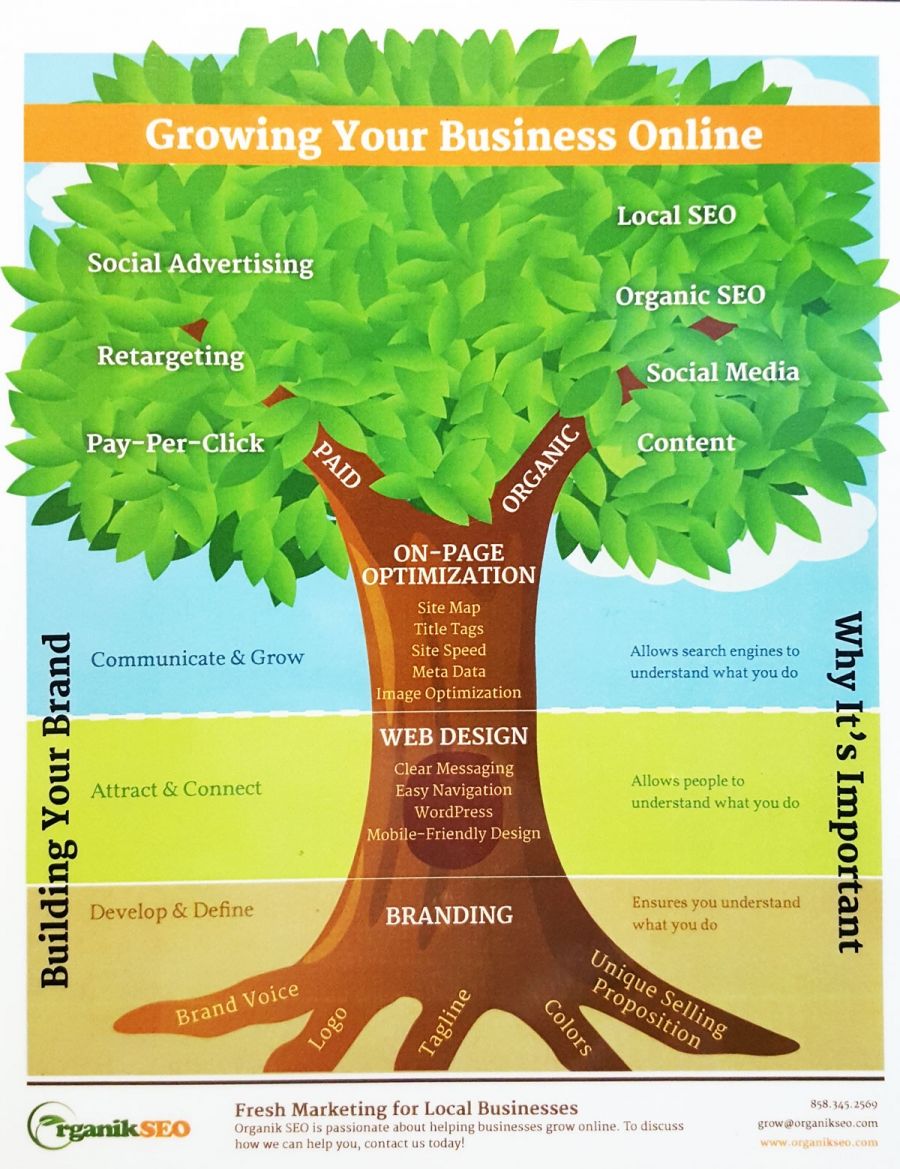
Stages of a Company's Digital Presence
1. The Roots - Develop & Define
This is the stage where a company needs to plant the seeds and slowly define and grow the foundations of its brand, unique value proposition, and what they stand for.
The infographic shows the roots of this beautiful tree with the words: Brand Voice, Logo, Tagline, Colors, Unique Value Proposition. This important step helps a company define and understand what they do and what products/services they'll focus on offering their target audience.
2. The Core - Attract & Connect
At this stage the company's purpose is to ensure they have a digital home on the Internet, a website. This stage is represented by the core part of the tree's trunk, which greatly represents the importance that this part of the tree has to the overall success of the tree's growth, height and success.
In today's digital world, without a website your company practically doesn't exists for about 99.99% of the world. A professionally designed business website allows your company to tell people what you do, with the purpose of attracting new leads, connecting with prospective users and showing the best virtual face your company can design.
Important elements to develop an amazing and successful website include clear messaging, easy navigation, a responsive mobile-friendly design, clear call-to-actions, etc.
In fact, our company focuses in helping small and medium businesses to develop and grow their company's digital presence through Stage 1 and 2 of this infographic.
3. The Canopy - Communicate & Grow
Towards the top of the tree's trunk and all the way to the top of the canopy, a company's brand should be focusing on the communication and growth stage.
This is the time where a company focuses on increasing its search engine's rankings - organic and paid - through various advertising mediums and on-page & off-page SEO techniques.
On-page optimization must come before paid and organic traffic initiatives, to make sure that a company's website is professionally built and optimized for the keywords, descriptions and information that search engines like Google is looking for. These important on-page SEO items help search engine spidbers/bots to understand what a company does.
If a company skips this step and rushes down to start advertising and creating content to generate inbound marketing traffic it would be committing a great mistake, as it wouldn't take the opportunity to properly label all of its pages, content and images with the right tags for Google to find, index and rank.
But let's be positive and assume that your company has already completed a thorough analysis of your website's on-page optimization status, and has taken the steps to modify and edit your site's content as needed to reach maximum exposure. Now it's time to move into paid and organic website traffic generating activities.
These activities are represented on the tree's canopy through the main paid and organic branches.
- Paid Website Traffic Activities: Pay-Per-Click (PPC, ADWords), Retargeting ADs, and Social Advertisting (Twitter, Facebook ADs).
- Organic Inbound Traffic Activities: Content Development (Writing blog posts and articles showing clients what you can do, instead of telling them), Social Media Sharing, Organic SEO, Local SEO, Comments on articles, etc.
For this important stage in a company's digital prescence growth, we recommend medium to large companies to reach out to OrganikSEO for their expertise on this field. For small to medium businesses, our company offers basic on-page website optimizaiton and content development services for SEO.
Image Credit:OrganikSEO
Have any questions? We've love to hear your comments below
Want a helping hand with your marketing strategy?
